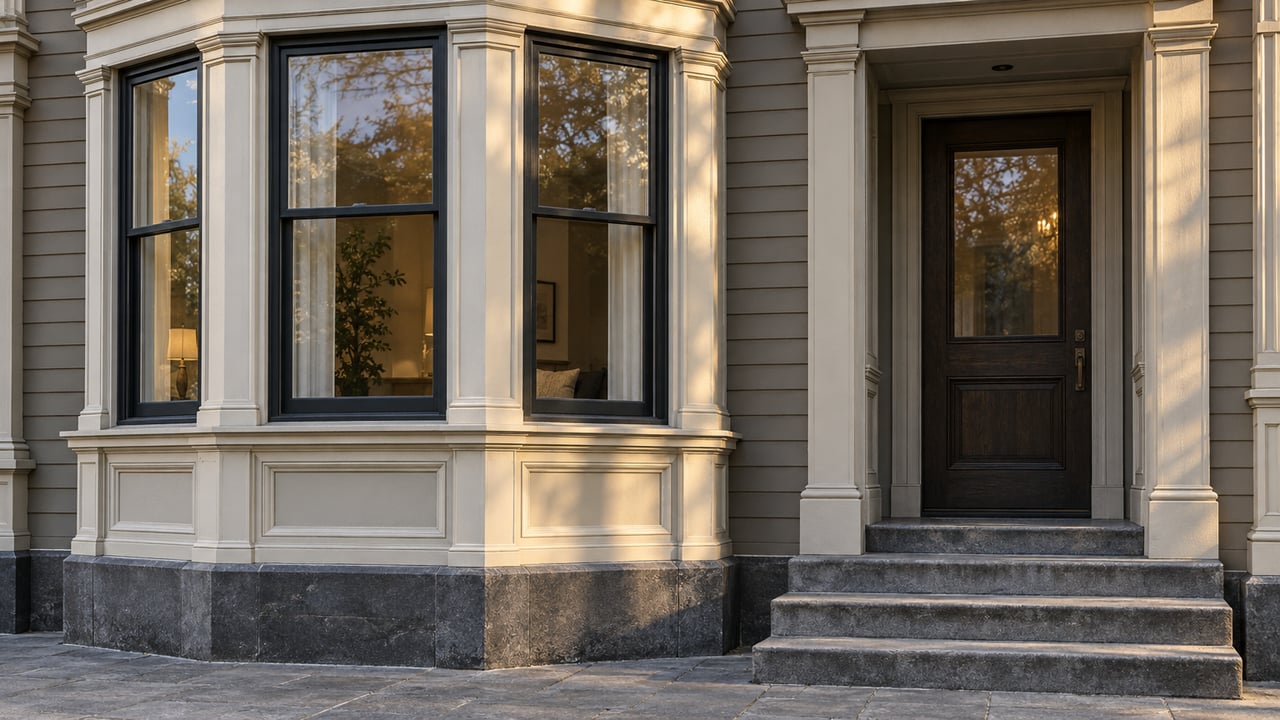
The cottage in the 300 block of Day Street, between Sanchez and Noe streets, was built in 1904. It had 1,450 square feet, three bedrooms, two baths and a garage, and it was in rough shape. The listing agent told the Noe Valley Voice that it "needed to be torn down." The asking price was $898,000. The house drew 30 offers and sold in August 2026 for $2,635,000, almost three times the ask.
Day Street is the extreme case, but this fall it isn't a fluke. In Noe Valley right now, the number on the listing works as a seller's opening bid. It's no longer the seller's estimate of value. A buyer who treats it as an estimate will lose on houses and condos alike, and the numbers that actually predict a sale price are in the recent closings.
A year ago, the ask was close to the answer
In the third quarter of 2025, the median Noe Valley sale closed at 102.0% of its original asking price, close enough that the list price was a fair guide. Over the same weeks of 2026, from June 30 to September 30, the median sale closed at 121.8% of the original ask.
The rest of the Q3 2026 numbers moved with it. Only 9.1% of Noe Valley sales closed below the ask, down from 34.1% in Q3 2025. Price cuts nearly disappeared: 1 of 44 sales in Q3 2026 had lowered its price before selling, down from 11 of 45 a year earlier. Houses went under contract in a median of 7 days after listing in Q3 2026, down from 12.5 in Q3 2025.
The number of sales didn't change. In Q3 2026, 44 Noe Valley homes closed, compared with 45 in the same weeks of 2025, and the mix of houses and condos was almost the same. So this isn't a busier market. It's the same small number of homes, listed at a different point relative to value.
Sellers are pricing low on purpose
San Francisco sellers have long set prices "to entice," and the San Francisco Chronicle reported in late October that some have gone further this year. Agent Butch Haze told the Chronicle that some sellers were pricing about a third below market value to set up what he calls "auction-style" sales. Another San Francisco agent, Pete Rodway, described the difficulty of pricing in this market: "We are pricing properties on aged data. And aged data in this market is three months."
Supply explains why the strategy works. The Chronicle reported that only 240 single-family homes were for sale in San Francisco at the end of September 2026, the lowest September total since at least 2020. In Noe Valley, Christine Lopatowski, who manages a brokerage office on 24th Street, told the Noe Valley Voice that owners holding 3% loans have little reason to sell "unless they have to." Turnover in the neighborhood was already low: homes that sold over the two years to September 30, 2026, came to about 3% of the neighborhood's homes per year.
Higher borrowing costs haven't cooled the bidding. Freddie Mac's Primary Mortgage Market Survey put the 30-year fixed rate at 7.11% on November 12, 2026, up from 6.43% on July 2 and 6.69% on August 6. Lopatowski told the Voice that many of September's winning buyers were "cash buyers," and that five of the nine September house buyers paid $1 million to $2 million over the asking price. For cash buyers, the rate matters mainly because it keeps owners with low-rate loans from selling, so fewer homes come to market.
The fall's named sales, by premium
These are the Noe Valley sales the Voice covered from August and September 2026, with their asking prices.
| Location | Closed | Asking price | Sale price | Sale as % of ask |
|---|---|---|---|---|
| 300 block of Day Street | August 2026 | $898,000 | $2,635,000 | 293% |
| 3900 block of 26th Street, top-floor flat | September 2026 | $1,695,000 | $2,511,000 | 148% |
| 1000 block of Castro Street, Victorian | September 2026 | $5,495,000 | $7,650,000 | 139% |
| 400 block of Hoffman Avenue | September 2026 | $6,995,000 | $9,100,000 | 130% |
| 200 block of Clipper Street | August 2026 | $4,995,000 | $6,400,000 | 128% |
| 300 block of Duncan Street | September 2026 | $5,495,000 | $6,800,000 | 124% |
The Hoffman Avenue house, a fully renovated five-bedroom built in 1955, was Noe Valley's most expensive sale of 2026 through September. The Voice says it was the fourth-most expensive since 1999, when the paper began tracking sales. In this table, a premium of 24% to 48% over ask was ordinary for a finished home. Day Street is the only outlier.
Condos are bid up too
You might expect condos, with more comparable units and less unique character, to sell closer to their list prices. In Q3 2026 they didn't. The median Noe Valley condo closed at 121.9% of its original ask, and 87.5% sold above the ask. That share is slightly higher than for houses, where 85.7% closed over the ask in the same quarter. The Voice's September 2026 count, based on averages, found condos and TICs closing at 129% of list, compared with 109% in September 2025.
The split shows up in underlying value. Over the 52 weeks ending September 30, 2026, the median Noe Valley house rose 21.6% to $3,200,000, and median house price per square foot rose 27.4% to $1,673. Over the same period, the median condo rose 6.7% to $1,675,000, and condo price per square foot rose 6.4% to $1,199.
So condos are bid as hard as houses relative to their asks, but over the year condo values per square foot rose about a quarter as much as house values. Most of a condo's large premium over ask comes from where the seller set the asking price. For a condo buyer, a 20% premium over a low ask doesn't mean the unit is worth 20% more than it would have been a year ago. It means the listing was priced to draw offers.
A better yardstick: price per square foot
If the asking price doesn't predict the sale price, recent closing prices per square foot are a better guide. The median Noe Valley house in Q3 2026 sold for $1,923 per square foot, across the 16 house sales with a recorded size. The median condo sold for $1,323 across 12 sales, a sample small enough to treat as a direction only.
Applied to the named sales, those medians separate a well-placed bid from a hopeful one:
- Hoffman Avenue: $9.1 million over 4,268 square feet is about $2,132 per square foot. That's above the Q3 house median, as expected for a renovated house with views and a home theater.
- 26th Street flat: $2,511,000 over 1,564 square feet is about $1,605 per square foot, well above the Q3 condo median. It is a remodeled top-floor unit with period details, southern views, a two-car garage and a landscaped yard.
- Day Street: $2,635,000 over 1,450 square feet is about $1,817 per square foot for a house the listing agent said needed to be torn down.
The Day Street number is the most revealing. Measured against its condition, the buyer was paying for the lot and the location. The list price told bidders nothing about that, and the per-square-foot math told them nearly everything.
Two cautions apply to this approach. The square footage recorded with a sale and the county's figure for the same home differ by more than 20% on almost half of matched Noe Valley sales, so compare sizes from the same kind of record. Averages can also mislead. The Voice noted that the Day Street sale helped push August's average house premium to 55% over asking, on a sample of six sales. Medians and recent per-square-foot ranges hold up better than any one month's average.
When the ask is a real number
One kind of listing still plays by the older rules. Over the two years ending September 30, 2026, 72.9% of Noe Valley homes on their first listing closed above the original ask, compared with 42.3% of homes that had been listed before. Counting from its first listing date, the median relisted home took 267 days to reach a contract.
A relisted home's ask has already been tested by the market, and that changes how to read it. A new listing priced below recent per-square-foot sales is an invitation to compete. A home back on the market after months has an ask closer to what its seller will actually accept, and the buyer is often the only one at the table. The same goes for 2-4 unit buildings. Unit sales in those buildings closed at a median of 100.0% of ask in Q3 2026, though on only seven sales.
For most buyers, then, the useful questions about a Noe Valley listing this fall are how its ask compares with the Q3 per-square-foot medians and whether it is on its first listing. Our earlier piece on strategic pricing for San Francisco sellers covers how sellers set these asks, and non-contingent offers in San Francisco covers the terms that tend to come with them.
Short answers
Is the September sales level holding into late fall? Citywide, the Chronicle reported that nearly three in four San Francisco condos sold in the first three weeks of October 2026 closed above asking. In Noe Valley, houses that closed in September 2026 sold at an average of 134% of list, so the September pace was still high going into October.
Does a big premium mean a buyer overpaid? Not necessarily. The Hoffman Avenue house sold 30% over ask, and its roughly $2,132 per square foot fits a renovated view property against a Q3 2026 house median of $1,923. Judge the price by the comparable sales. The size of the premium over ask says more about how the seller priced the listing.
Where does a buyer start? Start with the Q3 2026 per-square-foot medians for the property type, then adjust for condition, views and parking, and treat the ask as the floor of the bidding.
If you're weighing a Noe Valley listing this fall and want to know what its ask actually signals, a conversation with Stephen J Bartlett can start with the recent per-square-foot sales for that property type and work toward a bid based on the home's value rather than its list price. Schedule a Market Consultation.