Dogpatch San Francisco Gallery and Restaurant Openings
August 13, 2026
August 13, 2026
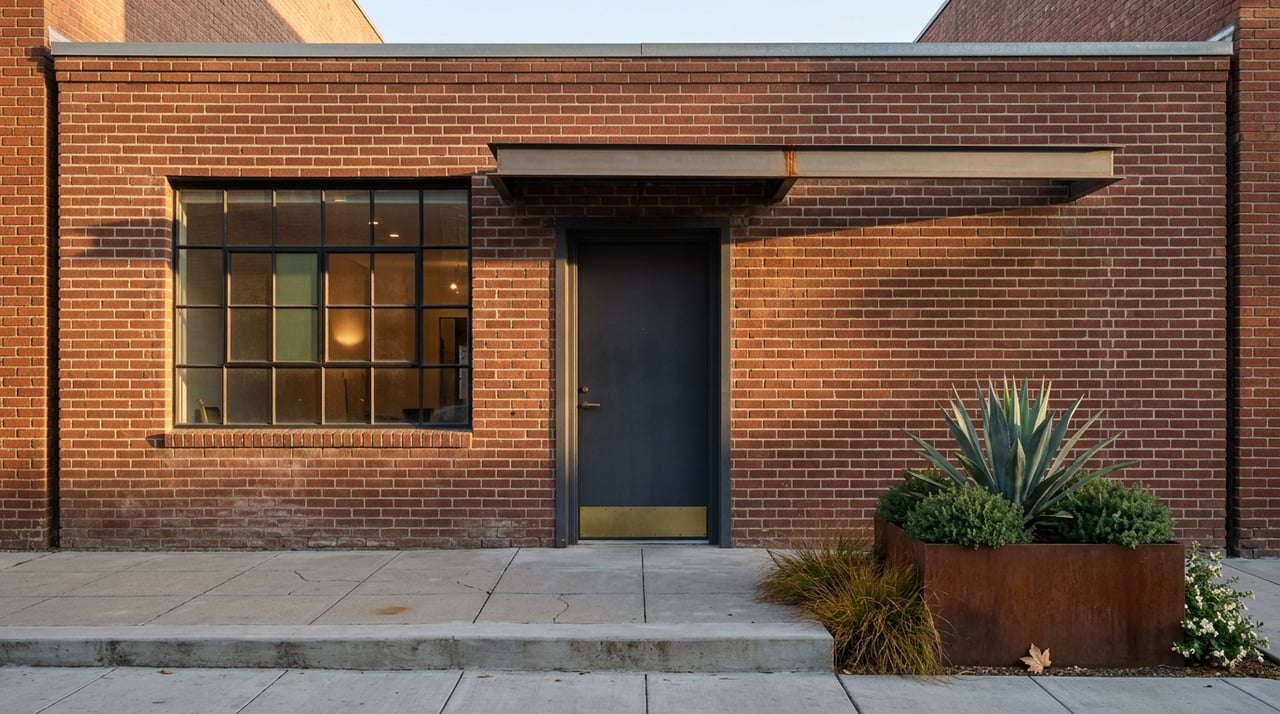
Walk down Minnesota Street on a Thursday evening in early August and the block reads like it always has: warehouse brick, a few lit storefronts, the low hum of Third Street traffic a block over. Nothing about the facade at 1275 Minnesota tells you that the room behind the glass changed hands twice in the past eight months, or that the gallery two doors down did the same. Dogpatch doesn't announce its turnover. You have to already live here to notice it.
But the pattern, once you see it, is hard to unsee. Over the past year, nearly every notable closure in this neighborhood has been followed almost immediately by an arrival with a bigger name attached to it. Not a replacement tenant filling space until something better comes along. A direct upgrade, in the same square footage, often within months. That is not the normal rhythm of a commercial corridor. It is a signal about how much this particular quarter mile of the city is worth holding onto.
The clearest example sits inside Minnesota Street Project, the three-warehouse gallery complex that has anchored Dogpatch's art identity since 2016. At the end of December 2025, Anglim/Trimble closed its ground-floor gallery there, one of several longtime dealers to exit the campus that year as the market for brick-and-mortar galleries tightened. Rena Bransten Gallery and Altman Siegel left around the same time.
Five months later, that same downstairs room reopened as something more permanent than any of its predecessors: the first dedicated public gallery for the estate of Ruth Asawa. Ruth Asawa Lanier, Inc. opened the 1,714-square-foot space on May 9, 2026, timed to what would have been the sculptor's 100th birthday. The inaugural show, "Ruth Asawa: Untitled," ran through June 20. A second exhibition opened August 8 and runs through October 3, meaning the room that sat vacant for less than half a year now has a full rotating calendar tied to an artist whose retrospective has already toured SFMOMA, MoMA, and the Guggenheim Bilbao.
Michael Berkowitz, president of the Dogpatch Neighborhood Association, called it a privilege to see the space turn into one "that celebrates such an influential artist and shares rarely seen works with the public." He added something that gets at the neighborhood's whole current mood: Dogpatch is a great place to visit, but it's even better to live here, because you get to watch it happen in real time.
The Asawa gallery is not an isolated case inside that same complex. A former Rena Bransten space at Minnesota Street Project reopened in February 2026 as Art of Contemporary Africa, described as San Francisco's first and only gallery dedicated entirely to contemporary pan-African art. Two closures, two openings, both landing within the same warehouse walls in the span of a single spring.
| Space | What left | What arrived |
|---|---|---|
| Downstairs room, 1275 Minnesota (former Anglim/Trimble) | Closed December 2025 | Ruth Asawa Lanier, Inc. gallery, opened May 9, 2026 |
| Former Rena Bransten Gallery space | Closed late 2025 | Art of Contemporary Africa, opened February 2026 |
Two departures do not make a trend on their own. But paired with the third and largest example in the neighborhood, they start to look like a pattern rather than a coincidence.
Dogpatch's most telling case is not a gallery swap. It is a museum's entire arc.
The Institute of Contemporary Art San Francisco was born here, opening in the summer of 2022 inside a refurbished 11,000-square-foot brick building on Third Street that had once housed a paint company. By October 2024, ICA SF had outgrown that home and relocated downtown into The Cube, a 29,700-square-foot former bank building on Montgomery Street.
Then came the twist. In October 2025, ICA SF announced it would leave The Cube entirely, trading a single fixed address for a citywide pop-up model with projects staged at the Transamerica Pyramid, the Port of San Francisco, and the Dogpatch Power Station. Director Ali Gass framed the departure not as a retreat but as a widening of ambition, saying the museum no longer needed a single permanent space to make an impact.
The Dogpatch Power Station stop on that itinerary is not incidental. In 2027, ICA SF plans to return to its original neighborhood with a project called "The Stack," converting the site's 300-foot smokestack into a vertical gallery overlooking a new 2.75-acre waterfront park. The museum that outgrew its first Dogpatch home is coming back to build something more ambitious than what it left behind, on a piece of industrial infrastructure the neighborhood has been sitting on for decades.
Walk two blocks over and the restaurant scene is telling an almost identical story, just with kitchens instead of galleries.
Wolfsbane, the fine-dining tasting-menu room that opened on Third Street this year, comes from Carrie and Rupert Blease, the couple behind the shuttered Michelin-starred Lord Stanley, working alongside chef Tommy Halvorson. That is not a first-time operator testing a concept. That is an established name closing one acclaimed restaurant and choosing Dogpatch, specifically, for the next one.
Piccino, the neighborhood's longest-running Italian room on Minnesota Street, didn't close to make way for something new. It expanded into the space next door with Bar Piccino, a standalone cocktail room open Wednesday through Sunday starting at 4 p.m., built for people who want a drink before their dinner reservation rather than a whole new destination.
And Souvla, the Mediterranean-inspired salad and wrap concept that already has four locations across the city, picked Dogpatch for its fifth, calling it the largest restaurant in the chain's history. SOHN, an all-day Korean-American café and gathering space from chef Deuki Hong and managing partner Janet Lee, opened in the same stretch, adding a second cultural anchor to a corridor that already had Marcella's Lasagneria and the original Piccino holding down the Italian end of the block.
None of these are unproven concepts hoping the neighborhood works out. They are operators who have already built something elsewhere in San Francisco and are choosing to put their next chapter here.
If you live in Dogpatch and haven't caught up with the block since spring, here is what's live right now:
None of that shows up if you're only scanning "what's new" listicles built from press releases. It shows up if you're paying attention to who is leaving a space and who is walking in right behind them.
The through line across all of this, the galleries, the museum, the kitchens, is that Dogpatch's turnover rate isn't a warning sign. It's closer to a screening process. Spaces here don't stay open long enough to go stale, and they don't stay empty long enough to worry about. When something closes, it tends to be replaced by an operator with more to prove and more reputation behind them, not less.
That's a specific kind of neighborhood momentum, and it's worth watching through the fall, especially with ICA SF's smokestack project on the horizon for 2027. Stephen J Bartlett tracks these shifts across San Francisco's eastern waterfront as part of daily work with clients who care about more than square footage. If you're curious how a neighborhood like this one fits into a longer view of the city, or just want to talk through what you're seeing on your own block, Stephen J Bartlett is glad to schedule a market consultation whenever it's useful.
Stay up to date on the latest real estate trends.
Along with his team, Stephen believes that you are entitled to the best real estate counsel you can get. Personal. Engaged. Strategic. Effective.