West Portal's Redesigned Station: What the City's New Numbers Actually Show
August 20, 2026
August 20, 2026
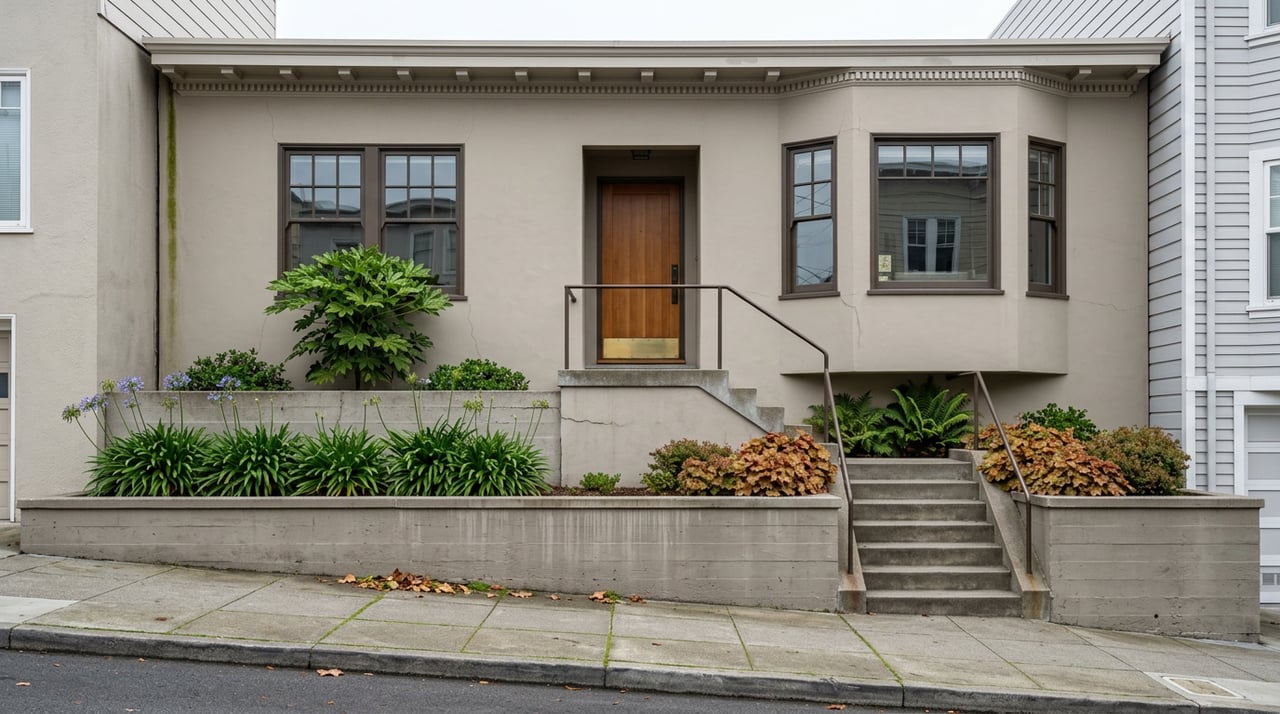
Stand at the horseshoe outside West Portal Station on a Tuesday morning and you will see the same choreography that has played out for a century: commuters funneling toward the tunnel mouth, the L pulling in from Taraval, a line forming at the candy counter at Shaw's. What you won't see, unless you know to look, is the flashing beacon at Ulloa and Wawona, the bollards ringing the old bus stop, or the bike-share dock that didn't exist two years ago. Those small additions are the physical record of one of the more contentious neighborhood fights San Francisco has had in recent memory, and this summer the city finally put numbers behind who was right.
The redesign traces back to March 16, 2024, when a 78-year-old driver going between 65 and 72 miles per hour struck and killed a family of four waiting for a bus outside the West Portal branch library: Diego Cardoso de Oliveira, Matilde Moncada Ramos Pinto, and their two young sons, Joaquin and Cauê. The driver, Mary Fong Lau, was charged with felony vehicular manslaughter and later pleaded not guilty. The crash pushed Supervisor Myrna Melgar and then-Mayor London Breed to ask SFMTA to reconfigure the intersection, and the agency moved with unusual speed for a city bureaucracy, putting a proposal out for public comment within weeks.
That speed is what set off the second half of the story, the part longtime residents remember just as clearly as the crash itself. The initial plan eliminated left turns at Ulloa and West Portal and cut off station access from Claremont Boulevard entirely. Merchants pushed back hard. Shaw's Candy owner Diana Zogaric worried the process was being fast-tracked without enough reflection. Pankaj Shah, who owns Roti Indian Bistro, put the fear plainly: customers would simply avoid West Portal and shop somewhere with easier parking. Business owners pointed to Valencia Street's bike lane redesign in the Mission as a cautionary tale, arguing sales there had dropped since similar changes went in.
Melgar and the merchants association didn't just talk past each other. They formed something called the Welcoming West Portal Committee, a working group that spent months trading alternative proposals before the SFMTA board voted unanimously on July 16, 2024 to approve a revised plan. Construction wrapped in September 2025. At the ribbon event, Kerry Riordan Sykes, a business owner who served on that committee, summed up the mood better than any official statement could.
"When you go to mediation, you come out a little unhappy, a little happy. And that's kind of how we came out with this."
SFMTA released its formal evaluation of the project in June 2026, comparing the eighteen months after the redesign to a matched window before it. The safety numbers are the ones that made headlines, and they are worth sitting with rather than skimming.
| Metric | Before the redesign | After the redesign |
|---|---|---|
| Injury crashes per year in the project area | 6.7 | 2.7 |
| Overall crash rate, half-square-mile project area | baseline | down 60% |
| Illegal U-turns at West Portal station | baseline | down 75% |
| Speeding on Wawona (southbound) | 19% of drivers | 7% of drivers |
| Residents who feel safe at Ulloa and Lenox | 50% | 70% |
A 60 percent drop in crashes sounds like the kind of number a city public information office would round up. It isn't. The report ties it to a specific, comparable time window, October 2024 through March 2026 measured against October 2022 through March 2024, which is the kind of apples-to-apples comparison that survives scrutiny better than a headline stat usually does.
Here is the part of the story that gets less attention than the crash data, and it is the part that actually resolves the two-year argument. The entire case against the redesign, from Zogaric's caution to Shah's warning to the Valencia Street comparisons at community meetings, rested on one prediction: safety changes would cost businesses customers.
SFMTA's evaluation found the opposite. Sales tax receipts in West Portal continued to outpace the citywide average after the project was completed, a trend that was already true before construction and simply held. In surveys of passersby, 95 percent said they visit West Portal businesses as often or more often than they did before the changes went in, and that number held up even among people who drive to the neighborhood rather than walk or take Muni. The fear that drove the loudest opposition to the project turned out to be the one prediction the data didn't support.
That matters for how you read the rest of the report. It is easy to accept crash statistics from an agency grading its own project. It is harder to dismiss a finding that directly contradicts what the agency's harshest critics predicted and still comes out in the agency's favor.
The comment section under Mission Local's July 2026 coverage of the evaluation is worth reading if you want the other side of the ledger. One resident, who posts videos of drivers under the handle Akit, regularly documents violations at Ulloa and West Portal and argues the No Left Turn and Do Not Enter signage gets ignored regularly enough that the intersection should be closed to private cars entirely. Another commenter raised a fair methodological point: a 60 percent drop sounds dramatic, but when the baseline number of incidents is already small, a shift of a few crashes a year can look like a bigger swing than it is.
Those objections don't undo the sales tax finding or the survey results, but they are a reminder that "the numbers are in" doesn't mean the debate is closed. Melgar has said asking whether the specific modifications would have saved that family is the wrong question to ask, since the changes were designed around the corridor's overall risk profile rather than that single set of circumstances. Reasonable people can still disagree about whether the compromise went far enough.
If you haven't been through the horseshoe with fresh eyes lately, here's what's physically different from two years ago:
None of it looks dramatic from a car window. That's arguably the point. The compromise that came out of the Welcoming West Portal Committee wasn't the sweeping redesign SFMTA first proposed, and it wasn't the status quo that some residents wanted preserved. It was something in between, and the June 2026 data suggests the in-between version worked better than either side expected.
The story of West Portal's redesign isn't really about traffic engineering. It's about which prediction turned out to be true when a neighborhood argued about it for two years. The safety numbers are the ones that get quoted, but the sales tax data is the one that actually settles the fight, because it's the prediction the loudest critics staked their argument on, and it didn't hold.
If you live near the horseshoe, that's worth knowing the next time a city agency proposes a change to your block. The instinct to protect a business district by keeping traffic patterns exactly as they are isn't wrong on its face, but West Portal's own numbers suggest it isn't automatically right either.
Stephen J Bartlett tracks these kinds of neighborhood shifts closely, not because every infrastructure story turns into a real estate story, but because the small, physical changes to a corridor like West Portal Avenue tell you something about how a neighborhood is actually functioning day to day. If you're thinking about what a street redesign, a transit change, or any other shift in your corner of San Francisco means for your own plans, Stephen J Bartlett is glad to talk it through. Schedule a Market Consultation whenever the timing works for you.
Stay up to date on the latest real estate trends.
Along with his team, Stephen believes that you are entitled to the best real estate counsel you can get. Personal. Engaged. Strategic. Effective.