Your Visual Guide to San Francisco Home Architecture
May 21, 2026
May 21, 2026
Wondering how to tell a San Francisco Victorian from an Edwardian, or a midcentury home from a newer condo building? You are not alone. In a city where architecture changes block by block, recognizing home styles can help you better understand a property’s character, upkeep, and place in the neighborhood. This guide gives you a simple visual framework for reading San Francisco homes with more confidence. Let’s dive in.
In San Francisco, home style is not just about decoration. According to San Francisco Planning, the city’s built environment reflects different eras, lot patterns, and neighborhood contexts, and residential design is expected to fit the rhythm of its surroundings.
That means when you look at a home here, you are often seeing more than curb appeal. You are seeing clues about when it was built, how it relates to the block, and what kinds of exterior details may shape maintenance or future updates.
In San Francisco, Victorian is a broad category. San Francisco Planning groups styles like Italianate, Queen Anne, and Stick/Eastlake under the Victorian era, which helps explain why Victorian homes can vary while still sharing some recognizable features.
The easiest way to spot a Victorian is to look for ornament. Many have bay windows, turrets, spindle screens, decorative shingles, projecting cornices, steep roofs, and long exterior stair runs. They often feel layered and lively, with multiple textures, materials, and colors working together.
A useful local reference is the Haas-Lilienthal House, which SF Heritage describes as a Queen Anne example with gable roofs, rounded bay windows, and classical ornament. If you enjoy walking neighborhoods to compare styles, places like Alamo Square, Haight-Ashbury, and the Western Addition are closely associated with San Francisco’s Victorian heritage.
From a practical standpoint, Victorians often stand out for their street presence. They can also come with more visible exterior upkeep because of their detailed trim and decorative elements.
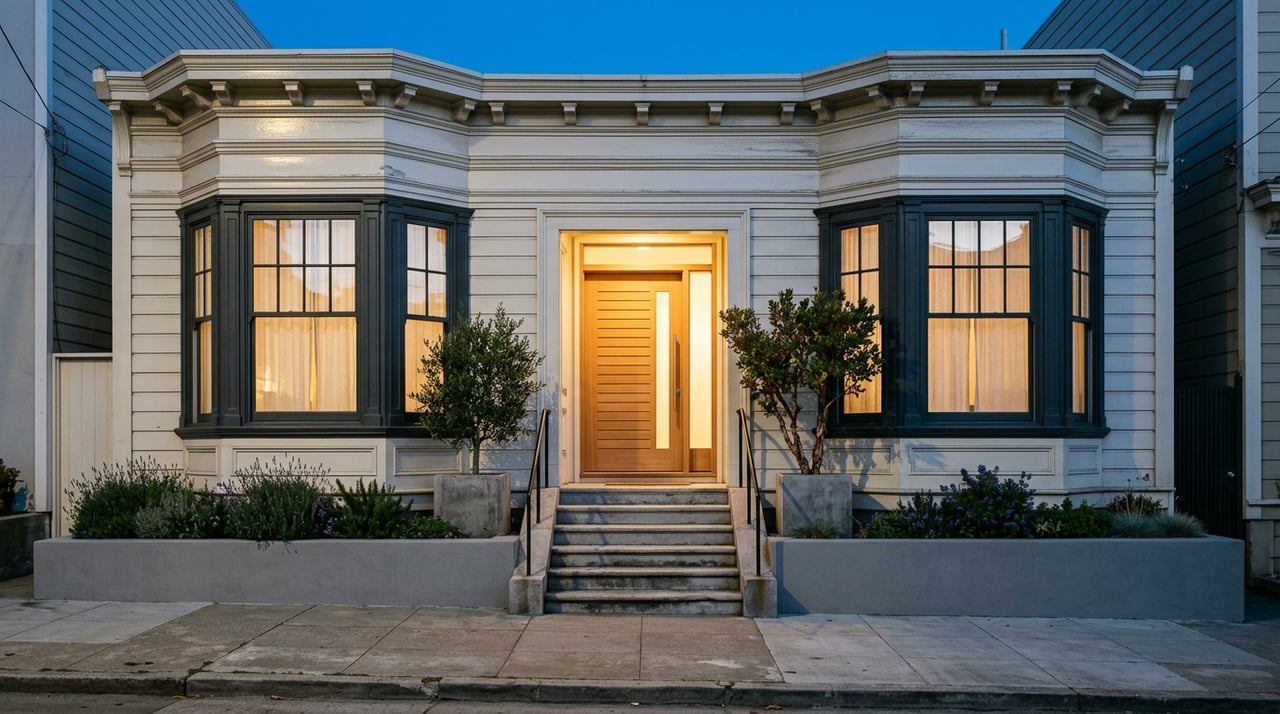
If Victorian homes feel decorative and dramatic, Edwardian homes often feel more restrained. In San Francisco, Edwardian commonly refers to a more Classical Revival look built around 1901 to 1910.
Compared with Victorians, Edwardians are usually boxier and more composed. You may notice wide angled or round bay windows, flat roofs, projecting cornices, columned porch entries, recessed doors, and plaster ornament such as garlands or floral friezes.
One important detail is that San Francisco Planning notes Edwardian massing often overlaps with leftover Victorian detailing. So if a home seems to mix cleaner lines with a few decorative touches, that is not unusual.
At street level, one of the simplest tells is the stair placement. Edwardian entry stairs are often tucked closer to the building rather than extending dramatically outward.
Duboce Park and Duboce Triangle are good visual reference points. San Francisco Planning describes that district as a remarkably intact mix of Victorian- and Edwardian-era residential buildings, which makes it a helpful place to compare the two side by side.
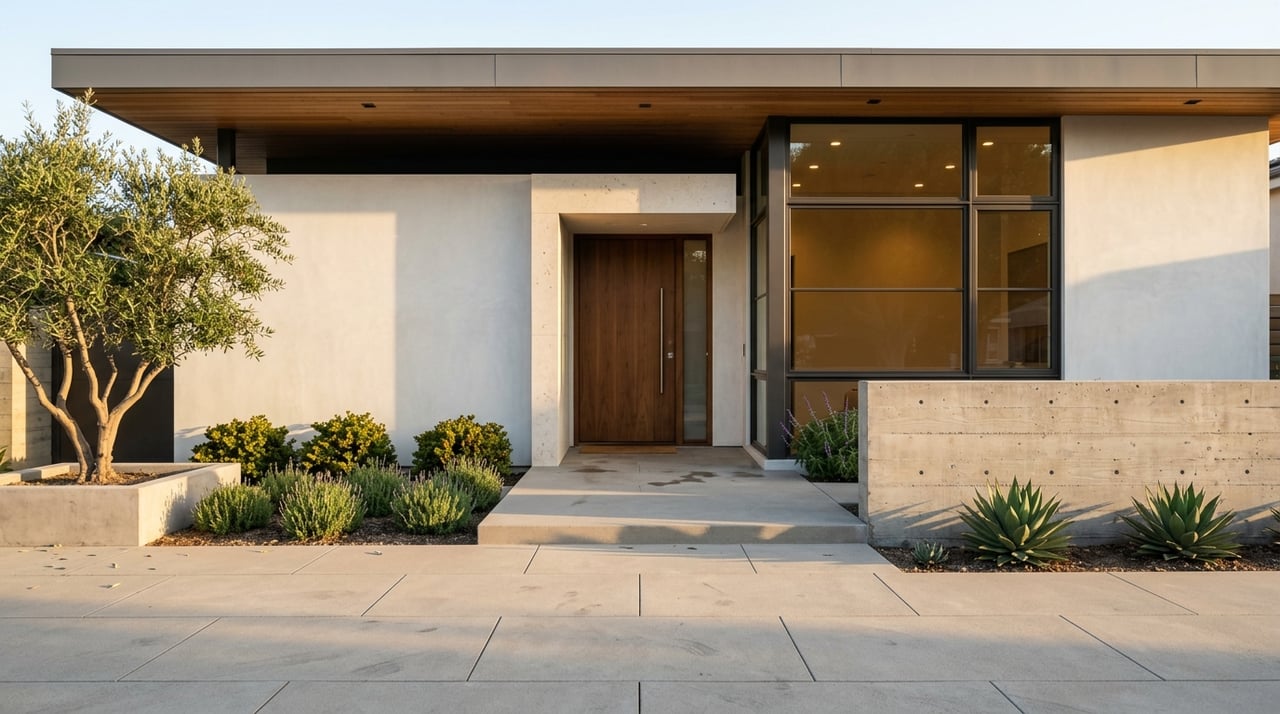
San Francisco Planning places Midcentury Modern in the postwar period, especially from 1945 to 1965. These homes moved away from ornament and toward simpler shapes and brighter interiors.
Visually, midcentury homes are easier to read once you know what to look for. Common cues include cantilevered overhangs, projecting eaves, large or canted windows, flat or shed roofs, projecting upper-story boxes, stucco or vertical wood siding, and contrasting colors.
In simple terms, these homes often look lighter and leaner than earlier San Francisco styles. Instead of decorative trim, the design interest usually comes from massing, window placement, and the relationship between the building and natural light.
These styles can blur together on a casual walk, but there are a few differences. San Francisco Planning notes that Streamline Moderne tract houses appeared in the Sunset District beginning in 1937 and often feature flat roofs, rounded corners, smooth stucco, glass block, porthole windows, and curved balconies.
A quick way to think about it is this:
For neighborhood reference points, look west and south. The Sunset District offers good examples of Streamline Moderne tract houses, while Visitacion Valley is noted by SF Heritage for Eichler work that reflects midcentury design ideas.
San Francisco lofts are concentrated mainly in SoMa and along the Market Street corridor. Planning materials define a loft as open, unpartitioned space, often in former commercial or light industrial buildings.
Unlike Victorian or Edwardian homes, lofts are not about decorative detailing. Their most visible feature is volume. You will often see large rectangular forms, brick or concrete shells, high ceilings, and very large openings or windows.
These buildings were designed for heavy loads and flexibility, which is one reason many adapted well to office or residential use later on. If you are touring one, the key visual question is usually not trim or style history, but how the open space, light, and scale work for your lifestyle.
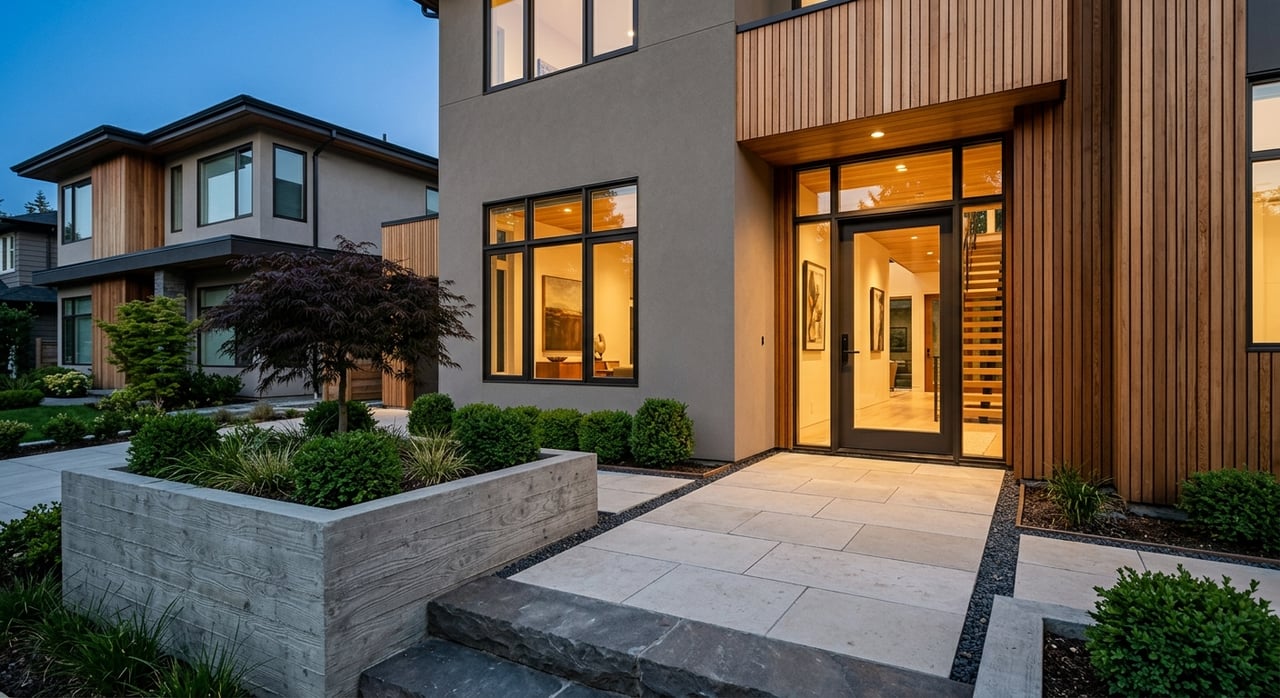
Newer condo buildings in San Francisco are often easier to understand through current design standards than through historic labels. San Francisco’s standards encourage buildings to show a clear base, middle, and top, and to use elements like bay windows, balconies, and vertical windows where possible.
They also call for massing to be broken down on wide or sloped sites and for high-quality materials to be used. Overly reflective glass is discouraged, and the city’s Residential Design Guidelines say new buildings and renovations should fit neighborhood rhythms and preserve historic resources.
So when you look at a newer condo building, pay attention to how the façade is organized. Does it step with the slope? Does it break up large wall areas? Does it relate to the scale and pattern of the surrounding block? Those are often the clearest clues that the design is responding to San Francisco’s urban context.
Home style does not determine value by itself, but it can shape how a property feels and functions. San Francisco Planning and preservation guidance suggest that style tends to matter most when it affects intact character, light, outlook, and how well the building fits its block.
As a practical guide, each style often hints at different day-to-day considerations:
This is not a pricing formula. It is a useful way to connect what you see from the sidewalk to what you may experience as an owner.
| Style | Easiest visual clue | Typical feel |
|---|---|---|
| Victorian | Ornate detail and projecting stairs | Decorative, layered, high character |
| Edwardian | Boxier form with restrained ornament | Calm, classic, more uniform |
| Midcentury | Clean lines and larger windows | Light, simple, modern |
| Loft | Big volume and industrial shell | Open, flexible, urban |
| Newer condo | Organized façade with contemporary detailing | Streamlined, standards-driven |
If you are buying, style recognition can help you narrow what fits your taste, maintenance comfort, and space needs. It also gives you a better lens for comparing homes that may look similar online but feel very different in person.
If you are selling, understanding your home’s style can help shape presentation. The right staging, photography, and marketing language often begin with knowing what buyers are actually responding to, whether that is intact Victorian detail, classic Edwardian symmetry, loft volume, or modern light.
In a city as visually layered as San Francisco, that kind of clarity matters. It helps you see not just what a home is, but why it stands out on its block.
If you want help understanding how a home’s architecture may influence buyer appeal, presentation strategy, or market positioning in San Francisco, Stephen J Bartlett offers thoughtful, client-first guidance tailored to the city’s distinct housing stock.
Stay up to date on the latest real estate trends.
Along with his team, Stephen believes that you are entitled to the best real estate counsel you can get. Personal. Engaged. Strategic. Effective.